How blumatix and Salzburg University of Applied Sciences are researching ways to make AI-driven invoice processing more reliable, controllable and self-learning.
Invoice processing is entering the next stage of evolution
The digital transformation of finance processes is accelerating rapidly. Structured formats such as XRechnung and ZUGFeRD are becoming increasingly important, while initiatives like ViDA are raising requirements for data quality, validation and automation.
At the same time, Large Language Models (LLMs) and modern AI technologies are evolving quickly. The real challenge, however, lies not only in model performance, but in the controlled and reliable use of AI within productive business processes.
This is exactly where the cooperation between blumatix and Salzburg University of Applied Sciences begins.
Powerful AI alone is not enough. What matters is reliable and controllable processing.

Why LLMs require special standards in finance processes
LLMs are capable of analyzing content, identifying relationships and extracting information. In finance and invoice processing, however, requirements differ significantly from traditional AI use cases.
Amounts, tax information and mandatory fields must be processed consistently and accurately. Errors are not merely technical issues — they directly impact business operations.
The more powerful AI models become, the more important mechanisms for evaluation, validation and result control become as well.
What matters in AI-driven invoice processing
The reliability score for LLMs
Research conducted by Salzburg University of Applied Sciences explores how the reliability of LLM-based extraction can be scientifically evaluated. To achieve this, outputs from multiple model variants are compared and statistically analyzed.
Based on these evaluations, confidence intervals and reliability scores are generated. These indicate how likely it is that an extracted value is correct.
This allows defined thresholds to determine whether a document can be processed automatically or still requires manual review. As a result, correct documents can be efficiently automated, while sensitive edge cases remain under controlled human supervision.
Stability
More robust extraction despite varying layouts and document structures.
Safety
Fewer errors in amounts, totals and tax information.
Control
Uncertain results remain transparent and verifiable.
Scalability
Large international document volumes can be processed reliably.
RAG and self-learning: When AI understands context
An LLM can read information from a document. Whether that information is meaningful or complete, however, often depends on context.
RAG — Retrieval-Augmented Generation — extends AI models with additional knowledge sources such as historical invoice data, supplier information, tax rates or typical accounting logic.
Combined with Human-in-the-Loop processes, this creates a controlled learning cycle: the AI processes documents, humans correct them when necessary, and these corrections are systematically integrated into future processing.
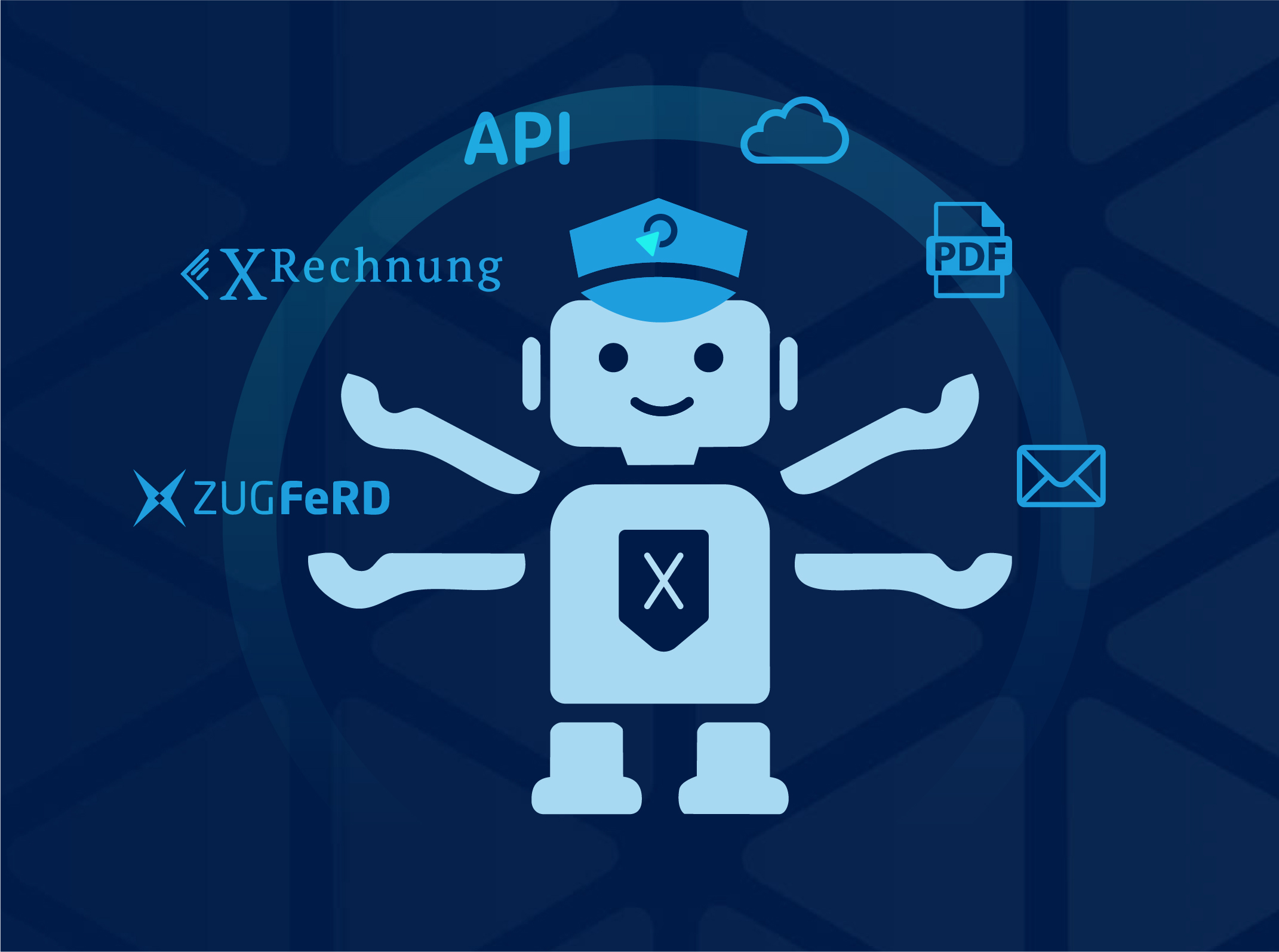
With multimodal models, Learn API and RAG components, bluDELTA already provides an architecture that enables continuous improvement in productive environments.
Self-learning systems require controlled feedback instead of uncontrolled automation.
Why this research matters for e-invoicing and ViDA
With EN 16931, XRechnung, ZUGFeRD and ViDA, requirements for invoice data across Europe are increasing significantly. Real-time and near-real-time reporting further raise expectations regarding data quality and process stability.
International invoice processes therefore require systems capable of delivering reliable and consistent results even with highly variable document structures.
The research partnership between blumatix and Salzburg University of Applied Sciences provides important insights into how AI systems can become more controlled, robust and production-ready in the future.
Bringing research and practice together
blumatix contributes experience from millions of processed documents and productive AI systems to the collaboration. Salzburg University of Applied Sciences complements this practical expertise with scientific research and methodological innovation.
The result is solutions that do not only work in theory or laboratory environments, but can be integrated directly into real business processes.
Advance AI-driven invoice processing in a controlled way
If you would like to explore how AI-supported extraction, validation and self-learning can improve your invoice processing, we would be happy to advise you personally. You can arrange a no-obligation consultation appointment or test BLU DELTA directly in a free live demo.