Why PDF invoices will not disappear despite mandatory e-invoicing
Starting January 1, 2025, all companies in Germany must be able to receive e-invoices. These are not PDFs, but structured electronic invoices compliant with EN 16931. Nevertheless, PDFs will not disappear from everyday business operations overnight.
There are several reasons for this: Companies may continue to accept PDFs and paper invoices if the recipient agrees. Many business partners — especially smaller businesses or international suppliers — will not immediately adapt their systems. In addition, EU-wide harmonization is not planned until 2030, meaning globally connected companies will continue to work with mixed invoice environments for years to come.
In short: Even as e-invoicing becomes standard, PDFs will remain relevant for some time. Companies focusing exclusively on structured formats today risk process disruptions and unnecessary manual effort.
The challenge is not the format itself, but the consistent processing of both worlds.

What exactly is an e-invoice?
An e-invoice is not a “digital document” in the traditional sense, but a structured data format that can be machine-read and validated automatically. The European standard EN 16931 defines which information must be included and in what format to ensure legal compliance.
The challenge: Managing two worlds at the same time
Between 2025 and 2028, two system logics will coexist in parallel: the traditional PDF world and the new XML-based e-invoice environment. For companies, this means increased complexity.
Unstructured PDFs must be processed using OCR and AI — a task that can become challenging depending on document quality. Structured XML invoices provide cleaner data, but require technical validation according to EN 16931 and often adjustments within ERP or finance systems.
This dual-track environment creates risks:
- Media disruptions
- Different process chains
- Increased error risks
- Parallel IT requirements
- Uncertainty regarding compliance and archiving
Without intelligent integration and clear process structures, inefficiencies quickly arise throughout the invoice workflow.
Why companies must master both formats now
How AI makes the transition manageable
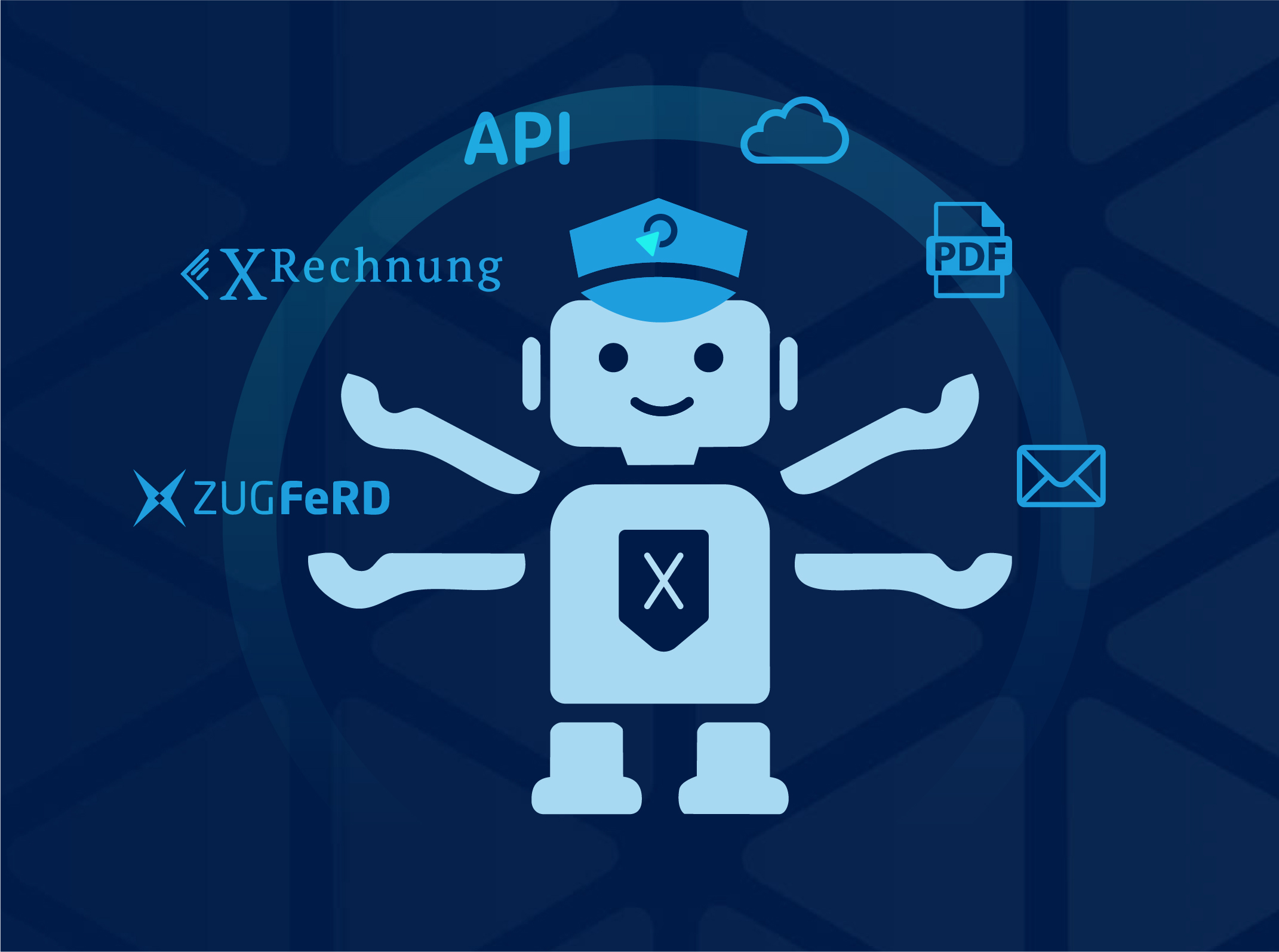
The good news: Modern AI systems such as BLU DELTA can automatically process both PDFs and structured e-invoices without forcing companies to manage completely separate workflows.
For PDF invoices, BLU DELTA AI extracts relevant fields automatically — from invoice numbers and totals to VAT information. Error-prone manual data entry becomes unnecessary. Structured XML invoices can also be validated automatically: Are calculations correct? Is all required information included? Does the invoice comply with EN 16931?
This is where AI demonstrates its true strength: It compensates for format differences, identifies data patterns, validates content and ensures that invoices arrive within the ERP system in a consistent structure. Companies benefit from a seamless and reliable end-to-end process.
Why BLU DELTA bridges both worlds perfectly
BLU DELTA was designed specifically for this scenario. The platform processes PDFs and XML invoices alike — quickly, validated, ISO 27001-certified and fully automated.
In practice, this means:
- Unstructured PDF invoices are analyzed by AI and converted into structured data.
- E-invoices such as XRechnung or ZUGFeRD are validated and checked automatically.
- Errors, inconsistencies and missing mandatory fields are detected automatically.
- Data is transferred seamlessly into ERP or accounting systems via REST APIs.
BLU DELTA therefore bridges the gap between today’s invoice landscape and tomorrow’s digital processes. Companies do not need to maintain separate workflows, but instead benefit from one central, unified process — regardless of the invoice format received.
Less effort
Manual processing steps and media disruptions are significantly reduced.
Higher data quality
Invoice data is validated consistently and processed in structured formats.
Greater security
Compliance and validation requirements can be managed more reliably.
Future readiness
Companies build the foundation for ViDA and future digital invoice processes.
Conclusion: The transition phase as an opportunity for automation
The coming years will represent a pragmatic mix of PDFs and e-invoices. Companies that actively shape this transition instead of merely enduring it gain a clear competitive advantage.
Organizations that automate now benefit immediately through:
- Reduced manual effort
- Higher data quality
- Lower error rates
- Compliant processes across all phases
- Future readiness for ViDA 2030
The real transformation does not begin in 2027 — it begins now. Companies capable of handling both formats create the foundation for fully digital invoice processing.
If you would like to evaluate how well your organization is prepared for e-invoicing and where automation potential exists, we would be happy to support you personally.